
Abandoned and Unwanted Cars
Can You Keep a Junk Car in Your Yard in Seattle?
The old sedan has been behind the house since the clutch went. You always meant to get back to it. Then a neighbor mentions the city, and you wonder whether the car is actually allowed to be there.
The short version is no if it is an inoperable car stored outdoors as junk. The longer version has some limits on what we can tell you, and we will mark those clearly.
Short answer
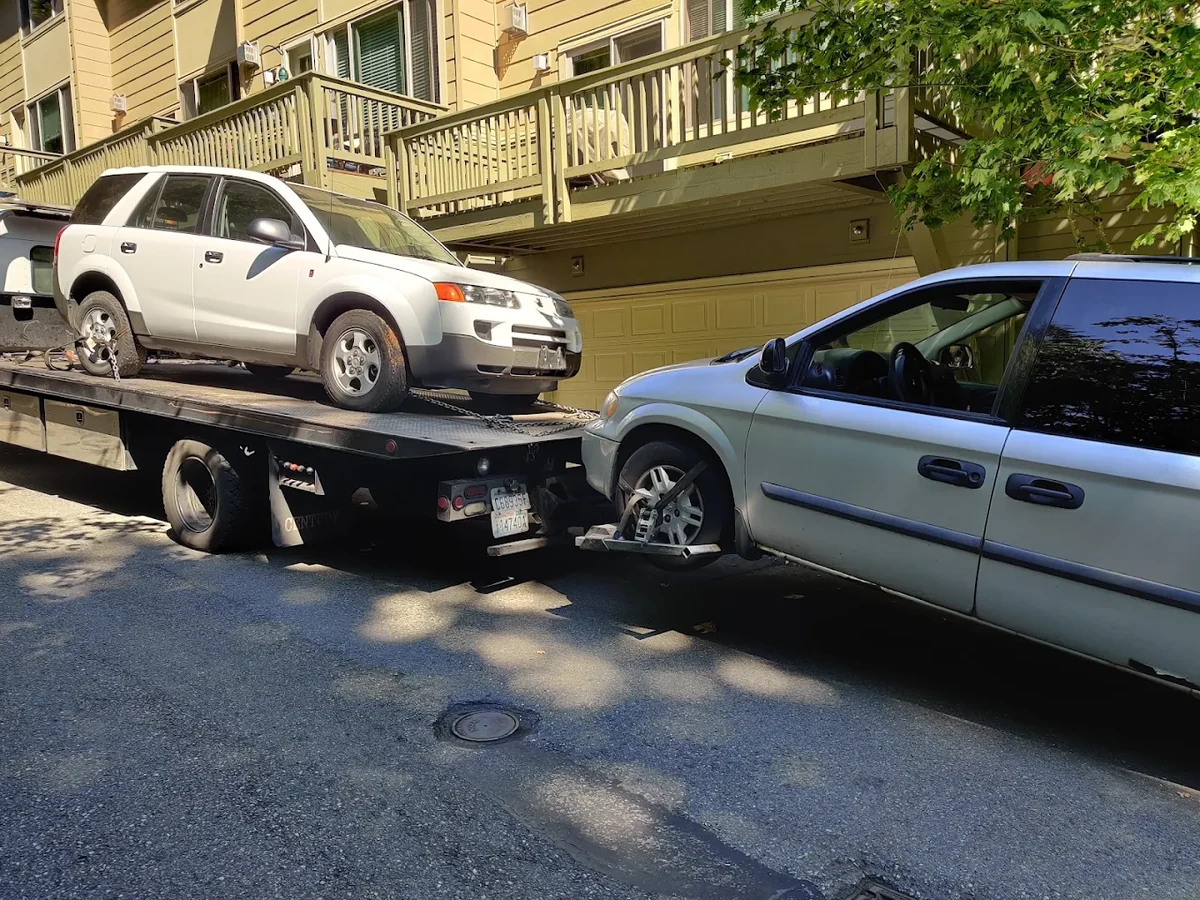
Generally no. Seattle’s construction and inspections department (SDCI) says you may not store inoperable vehicles as junk outdoors on your property. The first penalty is $150, and additional violations are $500. A car that runs is treated differently: neighborhood-residential zones allow up to three cars outside, with a setback from the front lot line. Confirm your own situation with SDCI.
What the city says
Two Seattle pages answer most of this.
- SDCI’s junk storage page says you may not store “inoperable vehicles” as junk outdoors, and to store non-working vehicles in a garage or off site. The first penalty is $150, and additional violations are $500. Fines are higher in certain zones, and inspection charges may apply.
- SDCI’s parking and car storage page, citing SMC 23.44.016, says neighborhood-residential zones allow up to three cars outside, with a 20-foot setback from the front lot line.
Read together, those pages mean the number of cars and the condition of the cars are separate questions. Having only one car does not make an inoperable car fine, and having a running car does not mean you can park it anywhere on the lot.
Your situation, in a table
| Your car | What we can say |
|---|---|
| Runs, and is parked outside on a neighborhood-residential lot | Up to three cars, with the 20-foot setback from the front lot line. |
| Does not run, and is stored outdoors | This is what the junk storage rule addresses. Expect a problem if it is reported. |
| Does not run, and is inside a closed garage | RCW 46.55.240 exempts a vehicle fully enclosed in a building and not visible from city junk vehicle abatement. Confirm with SDCI. |
| Being actively repaired, outdoors | We could not confirm a repair exception for Seattle. Ask SDCI before you rely on one. |
| On a lot outside neighborhood-residential zones | The three-car figure comes from the residential rule. Ask SDCI what applies. |
| On the street | Different rule. See the 72-hour limit. |
What we could not confirm
We want to be plain about the edges of this guide:
- We read SDCI’s and SDOT’s public pages. We did not read the full Seattle Municipal Code text on this subject.
- We did not find a city definition that says exactly when a car counts as “inoperable”, so we are not offering one. Whether flat tires or expired tabs alone count is a question for SDCI.
- City rules on junk vehicles can change. If it matters, confirm the current rule with SDCI before you act. Ask for the code section in writing.
The state’s definition of a junk vehicle, in RCW 46.55.010, uses a separate test of three out of four criteria for a certified vehicle. That is state law for a certification process, so do not assume the city uses the same words.
How state law fits
RCW 46.55.240 allows cities to abate junk vehicles on private property. Under that statute, the costs can be charged to the registered owner unless a report of sale was filed, or else to the property owner. A landowner may deny responsibility at the hearing, which matters if a car was left by someone else, and our abandoned car guide covers that case.
Your options if the car has to go
Decide whether it can be saved
Ask a mechanic for a written quote and compare it with the car’s value. A project you are really working on is different from a car you have stopped thinking about. Our guide to the project car you will never finish can help you be honest about which one it is.
If you are keeping it, get it inside
A garage solves the visibility question, and it protects the car.
If it has real value, sell it privately
A classic or a sought-after model may be worth more to an enthusiast than to any scrap buyer. Take the time to find out.
If it is done, have it removed
The car does not need to run. Call us and describe where it sits, and we will tell you whether a flatbed can reach it. Our guide to tight spots covers access. See non-running car removal.
If fluids have been leaking, read what to do about a leaking car before pickup. If you already have a notice, follow its deadline and read our code violation guide.
Common questions
Official sources
- Seattle SDCI: Junk Storage, Cars and Illegal Dumping Rules
- Seattle SDCI: Parking and Car Storage Rules
- RCW 46.55.240
- RCW 46.55.010
This post summarizes official Washington guidance as of November 2, 2026. It is general information, not legal or tax advice. Rules and fees can change, so check the sources above for your situation.
Keep reading
- Washington Junk Car Seller’s GuideEvery guide, sorted by where you are in the decision
- Washington Junk Car Paperwork GuideThe documents you need before pickup
- Got a Code Violation for a Junk Car in the Puget Sound Area?
- Car Impounded and Not Worth Getting Back? Read This First
- An Old Car on Family Land: How to Clear It Legally
- Clearing Several Old Vehicles From an Estate or Farm
- A Junk Car Stuck in Storage: Your Options
- Abandoned Car on Your Property in Washington: Step by Step
How we can help
4.9 out of 5 from 160 Google reviews · Licensed & insured · 20+ years in business
They made it so easy and fast! I called them gave them all the details and they came within the hour towed the car and gave us cash on the spot will definitely recommend them :)
Very fast service. The tow truck driver was very skilled at getting my SUV out of a tight spot. I appreciate how easy it was to work with this company. Highly recommend 💞
Fast same day service. I just had to make sure we had the title and the truck was clean and we were good to go! Thanks for getting rid of our old truck for free.
If you have any questions please call us at 206-941-0612