
Repair or Junk
Car Keeps Overheating: When to Stop Fixing It
You have replaced the thermostat. Maybe the radiator too. The gauge still climbs, and you have started carrying a jug of coolant in the trunk. You are wondering when this stops.
One overheat with a clear cause is usually a repair. A car that keeps overheating after several fixes is a different problem, because each part replaced was a guess that did not solve it. Here is how to get an answer, and when to stop.
Short answer
Stop swapping parts and ask for a full cooling system diagnosis, including a pressure test and a combustion gas test. If the cause is a leak, fan, radiator or water pump, repair it. If tests show a head gasket problem or engine damage, or the real cause cannot be found after a proper diagnosis, compare the next quote with the car’s value. Do not keep driving it hot.
If it is overheating right now
Pull over somewhere safe
Turn on your hazards. Shut the engine off once you are out of traffic. Running it hot can do lasting harm in a short time.
Stay away from the radiator cap
Do not open it while the engine is hot. Pressurized coolant can spray out and burn you. Give it plenty of time to cool.
Call for a tow
Do not nurse it home by stopping and refilling. Each overheat can add damage, and a stall in traffic puts you at risk.
Write down what happened
Note the speed, traffic, weather and whether the heater blew cold. Your mechanic can use all of that.
Your overheating pattern is a clue
When the car overheats tells a mechanic where to look. Note your own pattern before you go in.
| When it runs hot | Common places to look |
|---|---|
| In traffic but fine on the freeway | Cooling fan, fan relay or sensor |
| On the freeway or hills | Radiator flow, water pump or a low coolant level |
| Right after startup | Thermostat stuck, or very low coolant |
| Coolant vanishes with no puddle | Internal leak. Ask about a head gasket |
| Puddle under the car | Hose, radiator, water pump or heater core leak |
| Gauge swings, heater goes cold | Air in the system or low coolant |
Treat this as a starting point. Only a test on your car can confirm the cause.
Stop replacing parts, start testing
If you have already replaced parts without solving it, ask a shop to diagnose the whole system and to charge for that, rather than sell you one more part. Ask these questions:
- Have you pressure-tested the cooling system?
- Have you tested for combustion gases in the coolant?
- Is the fan coming on when it should?
- Is coolant flowing through the radiator as it should? Could it be clogged?
- Has all the air been bled out of the system?
- Could the gauge or sensor be the problem instead of the engine?
- Given how many times it has overheated, what damage should we check for?
- If this repair does not solve it, what do you test next, and will any of this bill count toward that?
When one more repair is the better call
Keep going when a test has pointed to a specific, confirmed failure. A leaking hose, a dead fan, a clogged radiator or a worn water pump are normal repairs on an older car, and fixing one may end the problem for good. That is especially true if the car only overheated once or twice, was shut off quickly, and otherwise runs well.
If the car has been reliable and the rest of it is healthy, finding the real cause is worth paying for, even after a few failed guesses. Earlier failed repairs are money already gone, so they should not push you either way.
When to stop fixing it
It is reasonable to stop when you see these:
- Testing shows combustion gases in the coolant, or the engine now burns coolant or runs rough. The next quote may be for far more than cooling parts.
- Many overheats, driven hot. Ask about warped or cracked metal. The damage may have already been done.
- Nobody can find the cause after a full diagnosis at a shop you trust, and you need a car you can rely on.
- Other big repairs are waiting too. See signs it is time to stop repairing.
- The next quote is more than the repair adds. Use our repair or junk comparison to check.
You should not treat a jug of coolant in the trunk as a plan. A car that needs one can leave you stranded in traffic, and a dying engine is the likely end of it.
Coolant on the ground
Coolant can be dangerous to pets and children, and it should not go down a storm drain. Put a drip pan under an active leak, clean up spills, and keep old coolant in a sealed, labeled container. Our guide to used oil and antifreeze disposal explains your options, and this one covers a leaking car waiting for pickup.
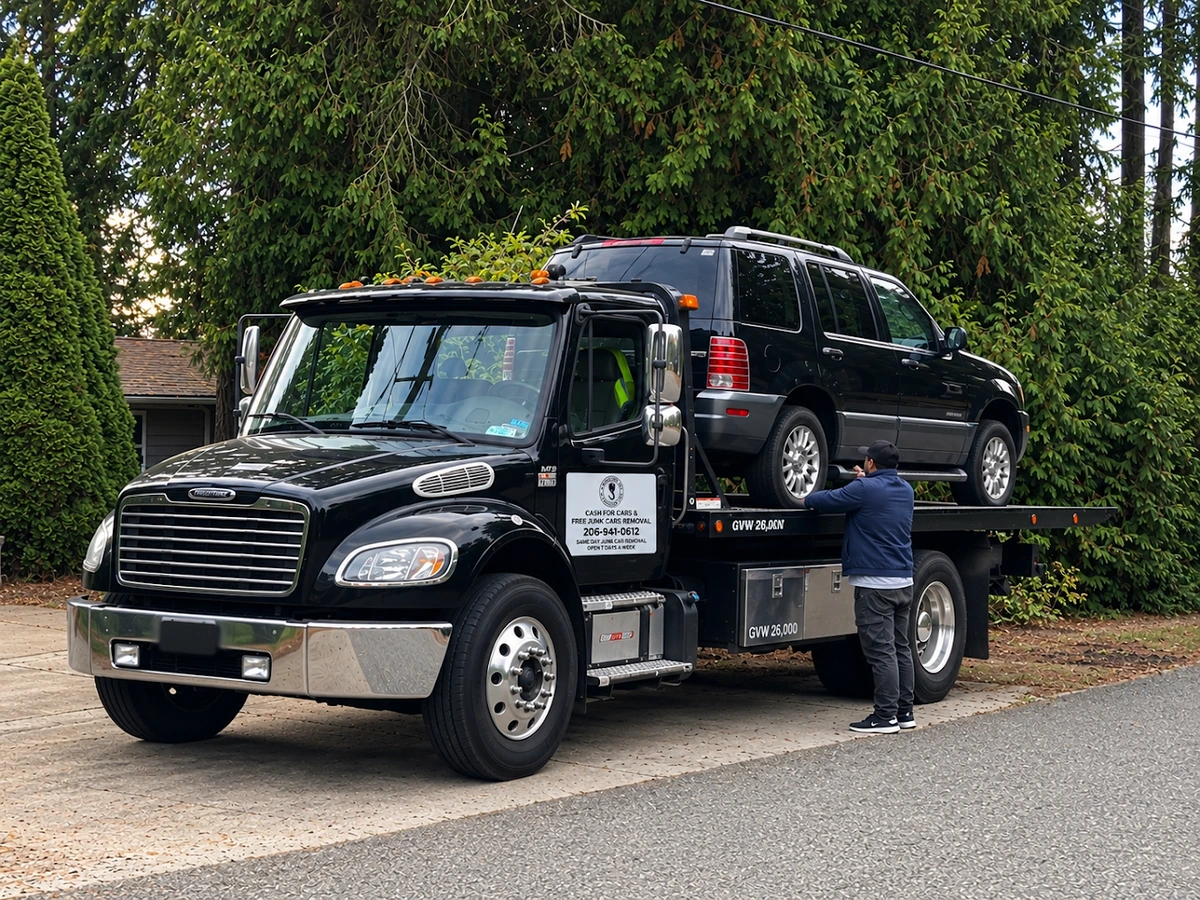
If you decide the car is done, it does not need to run for us to take it. We tow non-running cars free, so nobody has to risk one more hot drive.
Common questions
Keep reading
- Washington Junk Car Seller’s GuideEvery guide, sorted by where you are in the decision
- Washington Junk Car Paperwork GuideThe documents you need before pickup
- Rusted Frame or Body: Is the Car Still Worth Saving?
- Electrical Gremlins: When to Give Up on an Old Car
- Car Burning Oil: Keep Topping Up, Fix It or Junk It?
- Airbags Deployed: Is the Car Worth Repairing?
- Failing Suspension or Steering on an Old Car: Repair or Junk?
- Fire-Damaged Car: What to Do With It
How we can help
4.9 out of 5 from 160 Google reviews · Licensed & insured · 20+ years in business
They made it so easy and fast! I called them gave them all the details and they came within the hour towed the car and gave us cash on the spot will definitely recommend them :)
Very fast service. The tow truck driver was very skilled at getting my SUV out of a tight spot. I appreciate how easy it was to work with this company. Highly recommend 💞
Fast same day service. I just had to make sure we had the title and the truck was clean and we were good to go! Thanks for getting rid of our old truck for free.
If you have any questions please call us at 206-941-0612