
Repair or Junk
Airbags Deployed: Is the Car Worth Repairing?
You have been in a crash, the airbags went off, and now the car is sitting at a tow yard or in your driveway with white fabric hanging from the wheel. First, get checked by a doctor if you have not. Next comes the question of the car, and you do not need to rush it.
Deployed airbags do not automatically make a car a total loss, but they do tell you that the crash was serious enough to fire them. So the bags themselves may be only part of what the car needs.
Short answer
Do not drive it. If you have a claim, call your insurer before you repair or sell anything, since the insurer may decide the car is a total loss. Have a collision shop inspect it, including the airbag system, seat belts and structure. Repair can make sense when structural damage is limited and the numbers work. Without insurance, compare a full written quote with the car’s value.
What to do first
Do not drive it
With airbags gone, the car has lost protection, and there may be damage you cannot see. Have it towed, even if it starts.
Take photos
Get the whole car, the airbags, the dash warning lights, the damage and the scene if you can do it safely. Then keep every document you receive.
Call your insurer
Do this before anyone starts repairs, and before you agree to sell the car. If you have no claim to make, see wrecked car with no insurance.
Find out where the car is
If it is in a tow yard, storage may be adding up. Our guide to a car in a tow yard after an accident explains what to do.
An airbag repair is more than the airbags
When a shop quotes this repair, make sure it has looked at the whole system. Depending on the car, the crash could affect:
- The driver, passenger, side or curtain airbags that fired.
- The dashboard, steering wheel parts, seat or trim the airbags came through.
- Seat belts. Many have pretensioners that may fire in a crash and need attention too.
- Crash sensors and the airbag control module.
- Wiring, warning lights and any stored crash data the module holds.
- The frame or unibody, radiator support, suspension and steering.
Our guide to reading a repair estimate applies here too. Collision estimates often grow once the shop takes off damaged parts and sees behind them.
Questions for the collision shop
- Have you measured the structure? Is there frame or unibody damage?
- What new airbag parts does this need, and where are they coming from? Will you replace seat belts too?
- Will the airbag warning light go out, and how will you confirm the system works?
- What could you find once the damaged parts come off?
- Will you follow the manufacturer’s repair procedures for this model?
- What warranty do you give, in writing?
Airbag parts are safety equipment, so do not look for shortcuts here. Ask the shop plainly about where any replacement parts came from. Do not accept a car with an airbag warning light still on, or one that has had its light bypassed.
How the insurance route works
If an insurer is involved, it may decide the car is a total loss and offer you its value. Washington’s insurance commissioner says insurers must approve, deny or explain a delay after 30 days, and the rule on total loss settlements requires the insurer to give you its valuation report if you ask for it.
A total loss has rules of its own. DOL lists your options after a total loss: sell it, keep and repair it, keep it unrepaired, or use it for parts. It also says a salvaged car cannot be driven or parked on public roads until a new title has been issued. These guides go through each step:
- What totaled means in Washington
- Keep or sell a totaled car
- Keeping the salvage yourself
- The rebuilt title inspection
- If you owe more than it is worth
Do not sell the car before your insurer settles without asking first. See selling a wrecked car before insurance settles.
When repair is the better call
- The structure measures fine, and the damage is limited and clearly described.
- Your insurer approves the repair and does not total the car.
- The shop will repair it properly and stand behind the safety system in writing.
- The car was worth a good deal before the crash, and you plan to keep it.
When to let it go
- The structure is damaged, and a shop cannot say it will be right afterward.
- The full quote is far above what the car would be worth once repaired.
- There is no insurance money, and the car was already old and tired.
- The insurer totaled it and the numbers for keeping it do not work for you.
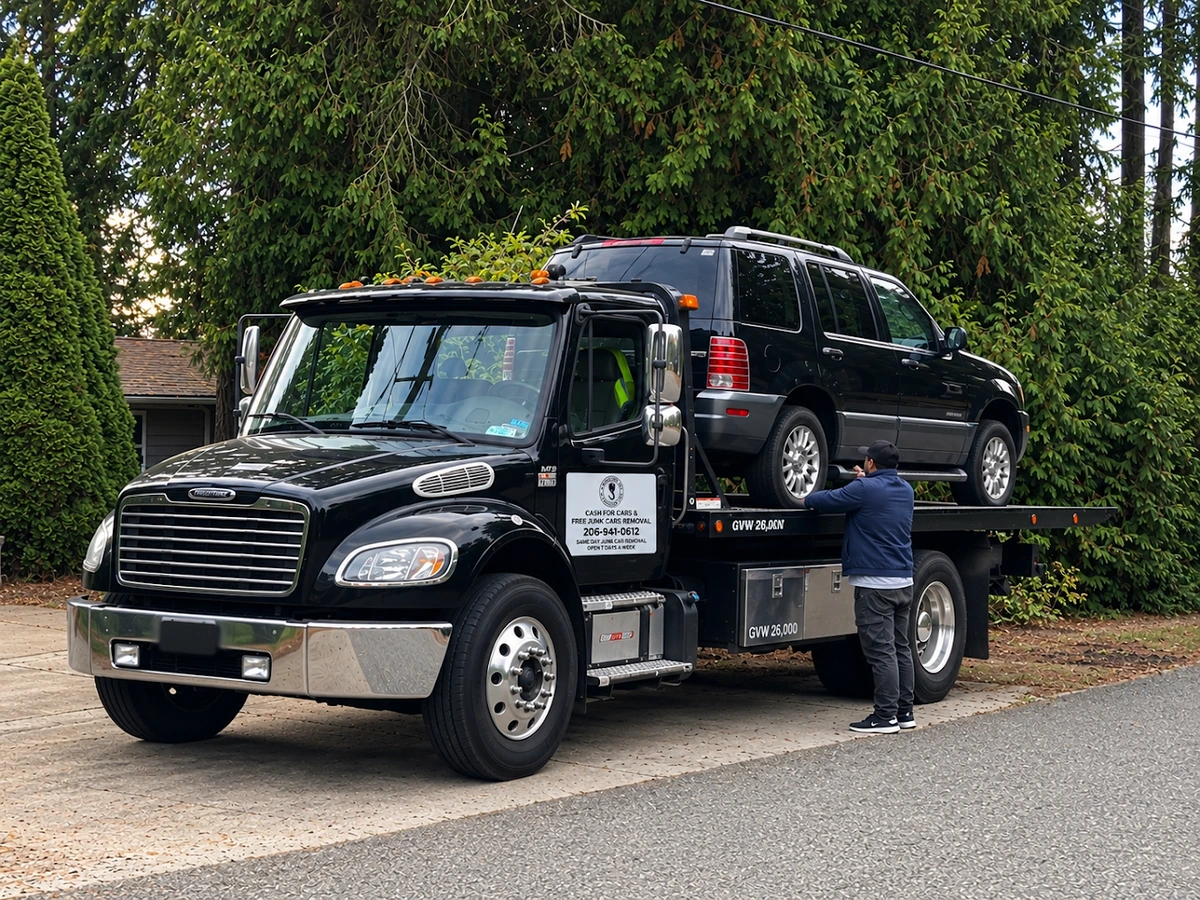
If you own the car free and clear and your claim is sorted out, we buy wrecked cars and tow them free on a flatbed. We need your title, an Affidavit in Lieu of Title or a Junk Vehicle Affidavit. If it is at a tow yard or shop, tell us when you call.
Common questions
Official sources
- Washington OIC: What happens after your car gets totaled
- WAC 284-30-391: Settling total loss claims
- Washington DOL: Salvaged vehicles
- NMVTIS: Official vehicle history site
This post summarizes official Washington guidance as of November 2, 2026. It is general information, not legal or tax advice. Rules and fees can change, so check the sources above for your situation.
Keep reading
- Washington Junk Car Seller’s GuideEvery guide, sorted by where you are in the decision
- Washington Junk Car Paperwork GuideThe documents you need before pickup
- Failing Suspension or Steering on an Old Car: Repair or Junk?
- Fire-Damaged Car: What to Do With It
- Mold in Your Car: Clean It or Let It Go?
- A Tree Fell on Your Car: What to Do Next
- Flood-Damaged Car: Repair, Claim or Junk It?
- 8 Signs It Is Time to Stop Repairing an Old Car
How we can help
4.9 out of 5 from 160 Google reviews · Licensed & insured · 20+ years in business
They made it so easy and fast! I called them gave them all the details and they came within the hour towed the car and gave us cash on the spot will definitely recommend them :)
Very fast service. The tow truck driver was very skilled at getting my SUV out of a tight spot. I appreciate how easy it was to work with this company. Highly recommend 💞
Fast same day service. I just had to make sure we had the title and the truck was clean and we were good to go! Thanks for getting rid of our old truck for free.
If you have any questions please call us at 206-941-0612