
Repair or Junk
A Tree Fell on Your Car: What to Do Next
The wind died down, you looked outside and there it was: a tree lying across your car. Maybe the roof is caved in, or maybe it is a big limb and a broken windshield. Your first instinct might be to grab a saw, or pull the car free. Please wait.
A storm can leave hazards you cannot easily see, and how you handle the first hour also affects your insurance claim. Here is a safe order to do things in.
Short answer
Stay clear of any downed wires and call 911 if you see any. Take photos before anything moves, then call your insurer before removing the tree or repairing the car. Have a professional take the tree off. A shop then checks the roof and pillars, since a bent structure is what usually decides repair or total loss. Only sell the car after you know how the claim will end.
Safety before anything else
- Assume any wire on or near the tree is live. Stay far away, keep others back and call 911 and your utility.
- If you are in the car and a wire is on it, stay inside and call 911. If a fire forces you out, jump clear with your feet together, never touching the car and the ground at the same time, and shuffle away.
- Watch for hanging limbs. More can fall after the wind stops.
- Do not climb on the tree, and do not use a chainsaw on a loaded trunk. Stored tension can make it spring or roll.
- Do not try to drive the car out from under it.
- If a tree is blocking a road, call 911 or the local non-emergency number.
What to do, in order
Take photos and video from a safe distance
Get the whole scene first, then the tree, the car, the plate and any damage to nearby property. Show where the tree came from, if you can. Note the date and time, and save any storm alert.
Call your insurer
Do this before you pay for removal or repairs, if you can. Ask whether the tree may be removed now, and what the insurer needs. Keep the claim number.
Tell the property owner or landlord
If the tree came from someone else’s land, or the car was parked in a rented space or lot, let them know, and ask them to tell their insurer too.
Have a professional remove the tree
An arborist or tree service should do this. Keep every invoice, and ask your insurer about payment.
Protect what is left
Once it is safe, take out valuables and the registration. Cover broken glass if you can do it without climbing on anything.
Have the car moved and inspected
Do not drive it, even if it starts. Roof damage, broken glass and hidden harm can make it unsafe. Have it towed to a shop, and ask your insurer what it needs before any repair starts.
Working out whose insurance handles it
This is the question everyone asks, and we cannot answer it for your situation. It can depend on your own policy, on where the tree stood and on what the facts are. Start with your own insurer and ask:
- Does my policy cover a falling tree? Comprehensive coverage is the part of many policies that handles non-collision damage, but check yours.
- What is my deductible?
- If the tree came from a neighbor’s yard or a public space, do you handle that?
- Who pays for removing the tree from the car?
- Is storage covered if the car sits?
- If the car is totaled, how does the value get worked out? Can I see the report?
Under Washington’s claims rule, within 30 calendar days after you notify your own insurer of a claim, it must tell you whether the claim is accepted or denied, or give its reasons for needing more time. A denial must be in writing and cite the policy provision, and if the claim stays unresolved the insurer must explain why every 30 calendar days. If you are stuck, you can file a complaint with the insurance commissioner. If a neighbor’s tree is at the center of a real dispute, talk to an attorney.
Reading the damage
| Damage | What it may mean | Likely direction |
|---|---|---|
| Scratches, a broken mirror or a cracked windshield | Mostly surface damage | Repair is usually the better call |
| Dented hood, trunk or fender | Panels can usually be replaced | Repair may well make sense |
| Dented roof with no pillar damage | Repair is harder and may need a new roof skin | Get a written estimate |
| Bent pillars, doors that will not close | Structural damage | May well be a total loss |
| Crushed cabin | Severe structural damage | Almost certainly let it go |
| Water got in through the opening | Interior and electrical concerns | Add to the estimate. See mold in your car |
Ask the shop to measure the structure, check that the doors and glass line up, and confirm the airbags and wiring work. If the car would not be worth much anyway, compare the quote with what it adds using our repair or junk guide.
When repairing is the better call
Repair makes sense when the damage is mostly glass and panels, the structure measures fine and your claim will pay for most of it. A good car with a dented hood should not be junked just because the storm was scary. Even without insurance, a straightforward repair on a healthy car can be worth doing. Get a written quote before you decide.
If it is totaled or not worth repairing
If the insurer totals it, read about your options in keep or sell a totaled car. If you will own the car and are not repairing it, you can sell it. DOL says a salvaged car cannot be driven or parked on public roads until a new title is issued, so get it picked up once you are able to.
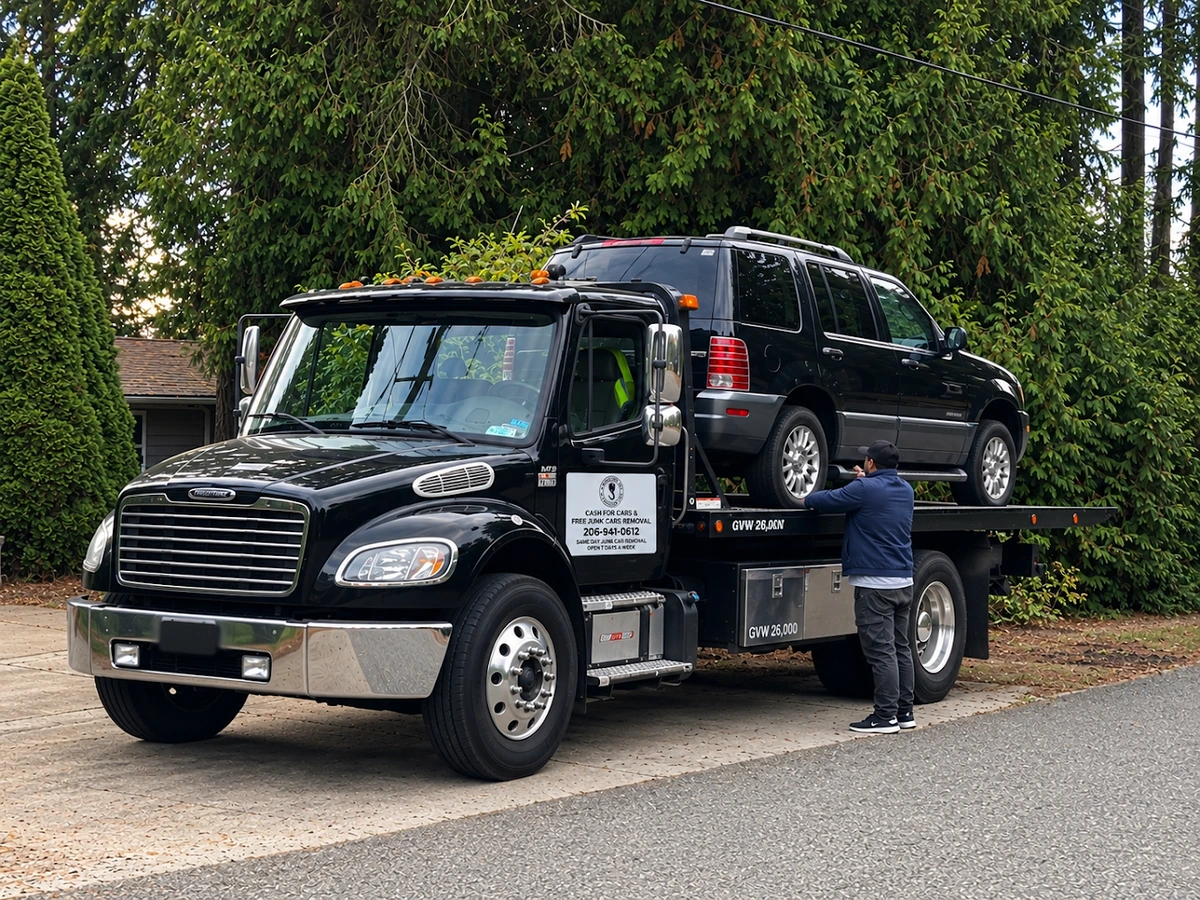
We pick up wrecked cars on flatbed tow trucks, for free, from driveways, lots and streets. Please have a professional get the tree off the car first. Tell us about any crushed roof or wheels that do not roll, along with your paperwork. If your claim is still open, see selling before insurance settles.
Common questions
Official sources
- WAC 284-30-380: Accepting or denying claims
- Washington OIC: File a complaint
- Washington DOL: Salvaged vehicles
- RCW 46.61.590: Unattended vehicles on a highway
- RCW 46.55.085: Vehicles left along a road
This post summarizes official Washington guidance as of November 2, 2026. It is general information, not legal or tax advice. Rules and fees can change, so check the sources above for your situation.
Keep reading
- Washington Junk Car Seller’s GuideEvery guide, sorted by where you are in the decision
- Washington Junk Car Paperwork GuideThe documents you need before pickup
- Flood-Damaged Car: Repair, Claim or Junk It?
- 8 Signs It Is Time to Stop Repairing an Old Car
- Is an Unsafe Old Car Worth Keeping for Short Trips?
- Washington Ended Emissions Checks: Does That Save Your Old Car?
- Repair or Junk Your Car? How to Weigh the Decision
- How to Read a Repair Estimate Before You Decide
How we can help
4.9 out of 5 from 160 Google reviews · Licensed & insured · 20+ years in business
They made it so easy and fast! I called them gave them all the details and they came within the hour towed the car and gave us cash on the spot will definitely recommend them :)
Very fast service. The tow truck driver was very skilled at getting my SUV out of a tight spot. I appreciate how easy it was to work with this company. Highly recommend 💞
Fast same day service. I just had to make sure we had the title and the truck was clean and we were good to go! Thanks for getting rid of our old truck for free.
If you have any questions please call us at 206-941-0612