
Recycling and How It Works
Car Refrigerant and Junking: What the Rules Say
The old car’s air conditioning may not have blown cold in years, but there may still be refrigerant in the system. If you are about to junk it, you might wonder whether that is your problem.
For most sellers the short answer is: leave the system alone and ask your buyer how it is handled. Here is what the rule says, in plain terms.
Short answer
Do not try to remove or vent refrigerant yourself before junking a car. EPA says venting is prohibited, except CO2, and that the final person in the disposal chain must remove the refrigerant or make certain their customer removed it. Paid service work requires section 609 certification. Ask your buyer how it is handled.
What EPA says
The rule comes from the EPA’s motor vehicle air conditioning (MVAC) requirements. Three points matter here:
Who handles disposal
“When an MVAC system enters the waste stream, the final person in the disposal chain must remove the refrigerant, or make certain that their customer has removed it, prior to disposal.”
Venting
Refrigerant venting is prohibited, except CO2.
Paid work
Section 609 certification is required for paid service work on these systems.
Who the rule speaks to
Mostly the people at the end of the chain and those who service systems for pay. It is still a reason not to open a system yourself.
What this means for you
| If you want to | Do this |
|---|---|
| Junk the car as it is | Leave the system alone. Ask your buyer what happens with the refrigerant |
| Repair the A/C and keep the car | Use a shop with section 609-certified technicians. Ask to see how they recover refrigerant |
| Part the car out yourself | Have the refrigerant recovered by a qualified shop before you touch any A/C line. See selling vs. parting it out |
| Take it to a yard yourself | RCW 46.79.110 lets you tow your own vehicle to a wrecker or processor without a hulk hauler license. Ask them first how they handle refrigerant and what they need from you |
Mistakes to avoid
- Do not cut or crack A/C lines. Refrigerant under pressure can injure skin and eyes, and venting it is prohibited.
- Do not pay someone to empty it in your driveway without checking. Ask whether they are section 609-certified and how they recover it.
- Do not assume an empty system is really empty. A/C that blows warm can still hold refrigerant.
Refrigerant types vary with the age of a car. You do not need to know which one yours uses to junk it. A shop can tell you if it matters for a repair. Other risks exist with crash damage: if lines were damaged, stay clear of escaping gas, keep the area ventilated and call a shop.
Checking a shop before A/C work
If you are fixing the car or having the system emptied before parting it out, a few questions tell you a lot:
- Are your technicians section 609-certified?
- Will you recover the refrigerant with proper equipment, and not vent it?
- What will this cost, in writing, before you start?
What to ask a buyer
Anyone buying cars for scrap should be able to answer these without getting annoyed:
- Where does the car go after you pick it up?
- Who removes the refrigerant, and at what point?
- Do you hold a license I can look up? DOL’s lookup searches by name, license number, license type and location, and points to the state business license search if nothing turns up.
- What should I do, if anything, before pickup?
Our guide on questions to ask a junk car buyer has a longer list.
Where this happens for a car we pick up
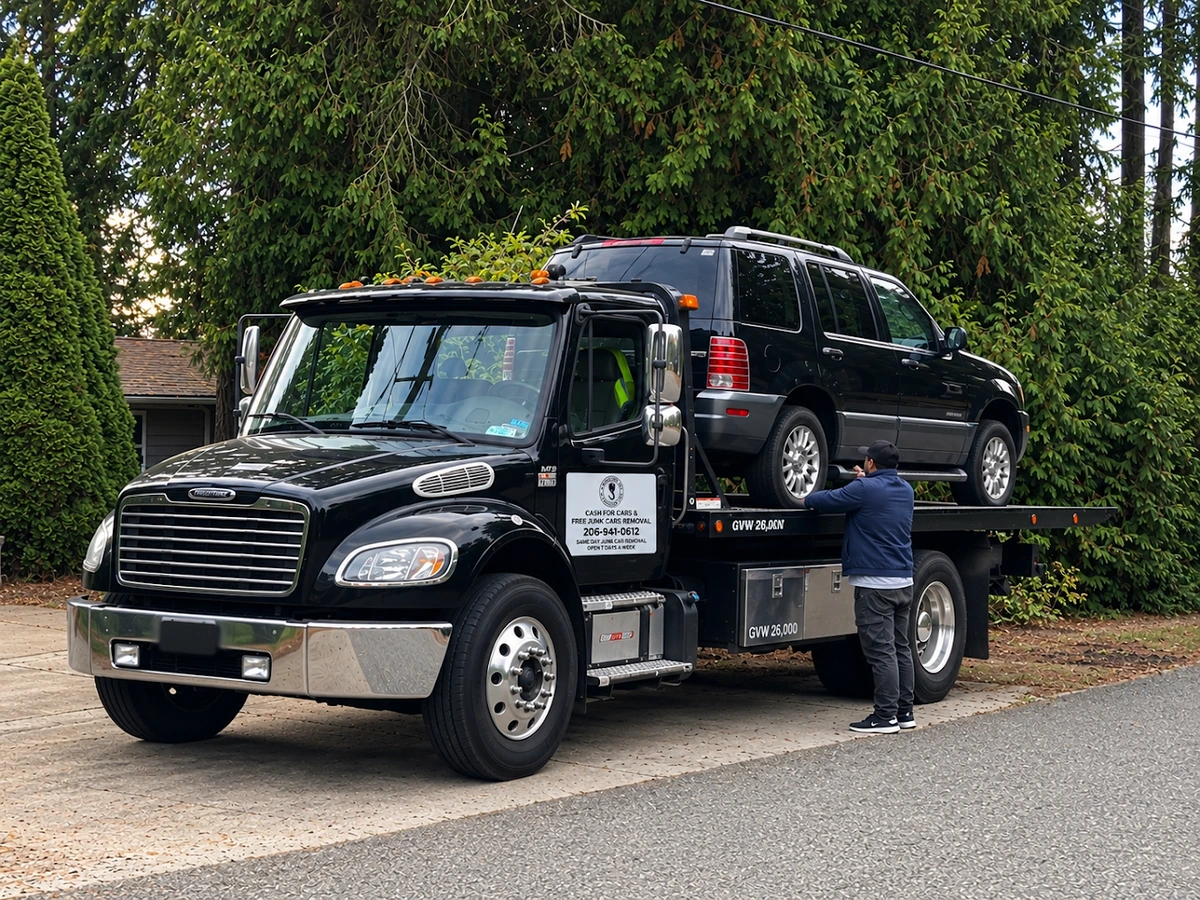
We tow cars to auto steel recyclers, where fluids are drained and tires and batteries are removed before crushing. Washington Ecology’s Vehicle Recycling Manual tells recyclers to remove refrigerants, along with mercury switches, lead wheel weights, fuel and batteries. That manual is guidance for recyclers, from 2017, and it is not a rule that applies to you as a seller.
So please do not open the system to get ready for us. If you have a question about it, ask when you call. Tell us if the car has crash damage to the front end, since that can be useful for the driver to know. For the rest, read what happens after your car is towed away, and our scrap car removal page.
If you still have the car and it runs, you may also want our honest look at junking and the environment.
Common questions
Official sources
- Washington DOL: Look up a business or professional license
- RCW 46.79.110: Towing your own vehicle
- Washington Ecology: Vehicle Recycling Manual, Publication 97-433
- US EPA: Regulatory requirements for MVAC system servicing
This post summarizes official Washington guidance as of November 2, 2026. It is general information, not legal or tax advice. Rules and fees can change, so check the sources above for your situation.
Keep reading
- Washington Junk Car Seller’s GuideEvery guide, sorted by where you are in the decision
- Washington Junk Car Paperwork GuideThe documents you need before pickup
- Dead Hybrid or EV: What Are Your Options in Washington?
- Junk Car Terms Explained: A Plain-English Glossary
- Washington Title Words Explained: Legal Owner, Brand, Release
- How Long Does It Take to Junk a Car?
- What Happens to Your Car After It Is Towed Away
- Is Junking a Car Good for the Environment?
How we can help
4.9 out of 5 from 160 Google reviews · Licensed & insured · 20+ years in business
They made it so easy and fast! I called them gave them all the details and they came within the hour towed the car and gave us cash on the spot will definitely recommend them :)
Very fast service. The tow truck driver was very skilled at getting my SUV out of a tight spot. I appreciate how easy it was to work with this company. Highly recommend 💞
Fast same day service. I just had to make sure we had the title and the truck was clean and we were good to go! Thanks for getting rid of our old truck for free.
If you have any questions please call us at 206-941-0612