
Recycling and How It Works
What Happens to Your Car After It Is Towed Away
It can feel odd watching a car you have owned for years roll away on a flatbed. Many people want to know where it goes, and whether anything about it can come back to bite them.
Here is the path, in order, along with the state rules that shape it.
Short answer
We take your car to an auto steel recycler. There the fluids are drained and the tires and batteries are removed. The car is then crushed and melted down. Your part is short: take your belongings and plates, and file a Report of Sale with the Department of Licensing within five business days.
The path, step by step
Pickup at your location
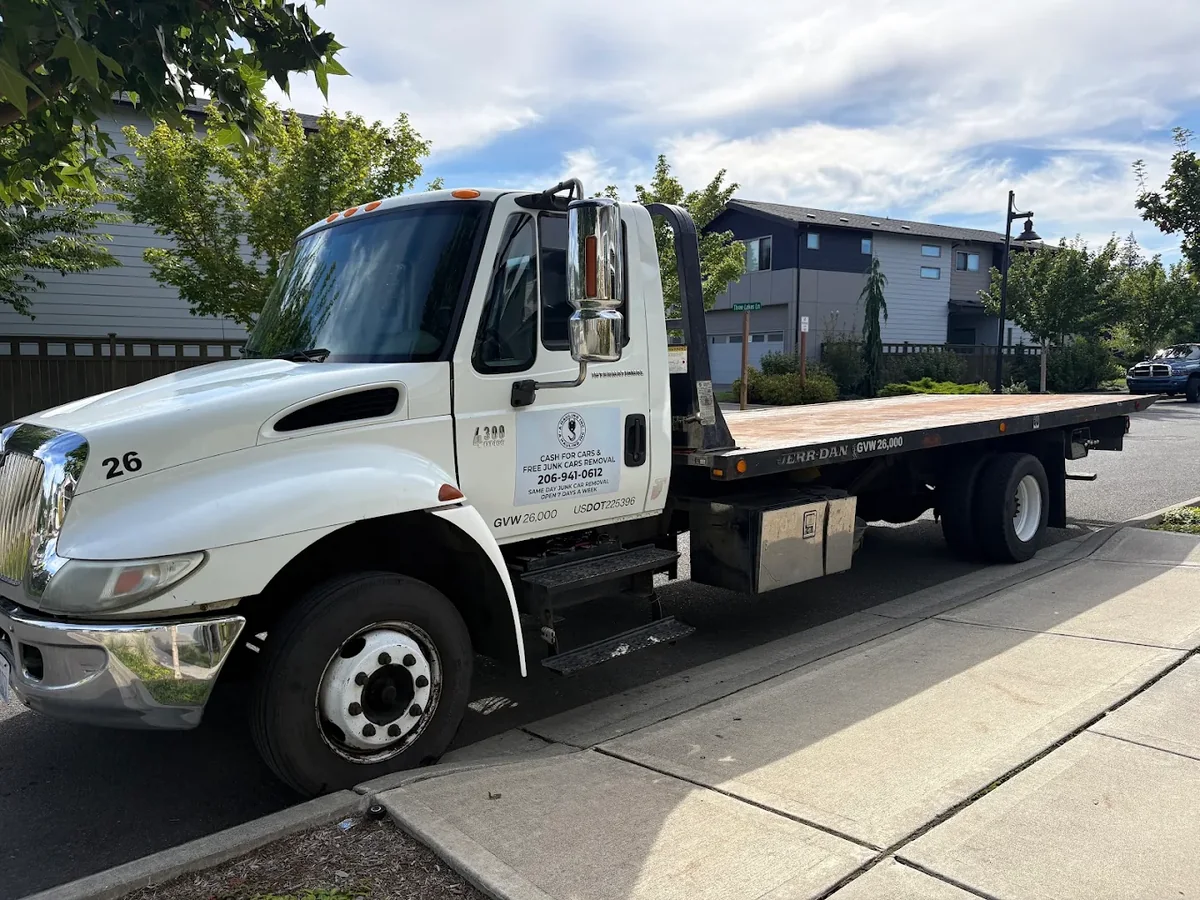
Our driver loads the car on a flatbed, checks the paperwork and pays you cash. We recommend you be there, to hand over the paperwork and get paid.
The tow to the recycler
The car goes on the truck with its paperwork. State rules for hulk haulers say the supporting documents must be in the hauler’s possession at all times while the vehicle is transported.
Fluids are drained
At the auto steel recycler, the fluids are drained from the car.
Tires and batteries are removed
These are handled separately from the metal.
The car is crushed
What is left is crushed, which makes it practical to ship.
The metal is melted down
The melted steel can then be used again in manufacturing.
The rules that shape it
Washington does not leave this path open-ended. A hulk hauler is a licensed business that transports or sells vehicles to a licensed wrecker or scrap processor “in substantially the same form” as they were obtained, under RCW 46.79.010.
| Rule | What it means for your car |
|---|---|
| Where it can be sold | Vehicles held by a hulk hauler “may only be sold to a licensed wrecker or scrap processor” (WAC 308-65-080). |
| Stripping on the way | Hulk haulers “may not operate as a wrecker or remove parts from vehicles,” with a narrow exception for items needed to sell salvage to a processor, removed at an approved location. |
| What a scrap processor is | A licensed site with a hydraulic baler and shears, or a shredder. |
| Title paperwork | A scrap processor forwards the title, release or affidavit to DOL with a monthly report (RCW 46.79.020). |
| Plates | Scrap processors must destroy plates before sending that report. Your plates should be off the car and with you long before that. |
For how these license types differ, see hulk hauler vs. wrecker vs. scrap processor or our license page.
What gets pulled out, and why
Our recyclers drain fluids and remove tires and batteries. Washington Ecology’s Vehicle Recycling Manual gives a fuller picture of what recyclers are told to handle. It is guidance for businesses, dated 2017, rather than a rule for you as a seller. It describes:
- Drip pans under leaks, and fluids drained over a covered concrete drip pad.
- Removing refrigerants, mercury switches, lead wheel weights, fuel and batteries.
If you are curious about the air conditioning side, see car refrigerant and junking. If your car is leaking now, read what to do before pickup.
What stays your job
Once the car leaves, you cannot easily get anything back, and the state still needs to hear from you.
- Before the truck comes: empty the glove box, trunk and door pockets. See cleaning out a car. Clear your phone and garage door codes from the car, too. See erasing personal data.
- At pickup: DOL says sellers are legally obligated to remove the plates. Hand over your paperwork, and get your cash.
- Within five business days: file your Report of Sale, as RCW 46.12.650 requires. It also applies to a car turned over to a wrecking yard or otherwise disposed of. Our Report of Sale guide walks through it.
If the car should not go this way
Crushing is final, so make sure it fits your car. If it runs, is safe, and has real value, a private sale or a donation may do more for you. Our post on junk, sell or donate compares those options. If you are not sure the car is beyond repair, try repair or junk first.
If this is the right end for your car, here is how a pickup works.
Common questions
Official sources
- Washington DOL: Sell a vehicle
- Washington DOL: Look up a business or professional license
- RCW 46.12.650: Report of sale and transfer
- RCW 46.79.010: Hulk hauler definitions
- RCW 46.79.020: Hulk hauler transport and scrap processor records
- WAC 308-65-080: Hulk hauler records and sales
- WAC 308-65-120: Scrap processor records
- Washington Ecology: Vehicle Recycling Manual, Publication 97-433
This post summarizes official Washington guidance as of November 2, 2026. It is general information, not legal or tax advice. Rules and fees can change, so check the sources above for your situation.
Keep reading
- Washington Junk Car Seller’s GuideEvery guide, sorted by where you are in the decision
- Washington Junk Car Paperwork GuideThe documents you need before pickup
- Is Junking a Car Good for the Environment?
- Old Oil and Antifreeze: Disposal in Washington
- How to Get Rid of Old Tires in Washington
- How to Dispose of a Car Battery in Washington
- Car Refrigerant and Junking: What the Rules Say
- Dead Hybrid or EV: What Are Your Options in Washington?
4.9 out of 5 from 160 Google reviews · Licensed & insured · 20+ years in business
They made it so easy and fast! I called them gave them all the details and they came within the hour towed the car and gave us cash on the spot will definitely recommend them :)
Very fast service. The tow truck driver was very skilled at getting my SUV out of a tight spot. I appreciate how easy it was to work with this company. Highly recommend 💞
Fast same day service. I just had to make sure we had the title and the truck was clean and we were good to go! Thanks for getting rid of our old truck for free.
If you have any questions please call us at 206-941-0612