
Repair or Junk
Timing Belt or Chain Failure: Repair or Junk?
The engine just quit while you were driving, or it will not start, and it cranks faster and smoother than it should. Or there is a rattle at startup that has been getting louder. A mechanic says it is the timing belt or chain.
This failure has an unusually wide range of outcomes. On one car, it is a repair and back on the road. On another, the same event wrecks the top of the engine. The difference comes down to your engine’s design and what happened at the moment it failed.
Short answer
Ask whether your engine is an interference design and whether the valves were damaged. If the belt failed but a compression or leak-down test shows the valves are fine, repairing is usually the better call. If the valves or pistons were hit, compare written quotes for the head work or a replacement engine with the car’s value. Do not keep cranking the engine.
What the belt or chain does, and why failure can be so bad
The timing belt or chain keeps the top and bottom of the engine moving together, so valves open and close at the right moment. When it breaks or jumps, that timing is lost.
Interference engine
The valves and pistons share the same space at different moments. If timing is lost, they can hit each other, bending valves and sometimes hurting pistons or the head.
Non-interference engine
There is room for the valves even when timing is lost. The engine stops, but the internal damage may be small or none.
Your owner’s manual may not use these words. Your mechanic can look up your exact engine and tell you. Make this your first question.
What to do right now
Stop trying to start it
Each attempt can make things worse if timing is off. If it quit in traffic, get yourself to safety and call for a tow.
Have it towed to a shop
Do not drive it, even if it starts again. A chain that has jumped, or a belt that is shedding teeth, can let go at any moment.
Tell the shop what happened
Was there a bang, a rattle, or a sudden quiet stop? Did it happen at speed or at startup? Details help.
Ask for testing before a full teardown
Testing often gives a good clue before the bigger cost of taking it apart.
Belt and chain problems are not the same
| Timing belt | Timing chain | |
|---|---|---|
| How it is meant to work | A rubber belt, replaced on a schedule in the owner’s manual. | A metal chain, usually meant to last longer, kept tight by tensioners and oiled by the engine. |
| Common warning | Often none. It may simply snap. | Rattle at startup, warning lights or rough running. |
| Common cause | Age and mileage past the schedule, or a failed pulley or water pump. | Stretching, worn guides, or oil problems. |
| What to check | Damage to valves. Was the rest of the belt kit replaced? | Oil condition. Oil sludge or low oil may have caused it, and may hurt other parts too. |
If you only have a rattle and the car still runs, you may be in the best position of all. Fixing a noisy chain before it fails can be a far smaller decision. Ask a shop soon, and ask if it is safe to drive there. If they say no, tow it.
Questions for your mechanic
- Is my engine interference or non-interference?
- Have you done a compression or leak-down test, or looked inside with a camera?
- Are any valves bent? How do you know?
- If the valves are damaged, does the head need machine work, or would a replacement engine make more sense?
- Does the quote include the tensioners, guides, seals and water pump, if your engine has one driven by this belt?
- Why did it fail? Could the same cause take out the new one?
- What warranty comes with the work?
When repairing is the better call
Lean toward fixing it when any of these fits:
- It is a non-interference engine, or testing shows the valves survived.
- The chain is noisy but has not jumped, and the shop can fix it before it fails.
- Valve damage is confined to the head, the quote works against the car’s value, and the car is otherwise good.
- You have a car you trust, in decent shape and with records.
In these cases, the failure may leave the rest of the engine in fine condition, and a repair can buy real years of use. Compare the written quote with the value the repair would add.
When it may be time to let the car go
- Pistons, the head or the block are damaged, and the job is close to replacing the engine.
- The chain failed because of oil sludge, which may mean wear elsewhere in the engine.
- The transmission, rust or brakes need big work too.
- The written quote is well above what the repair would add.
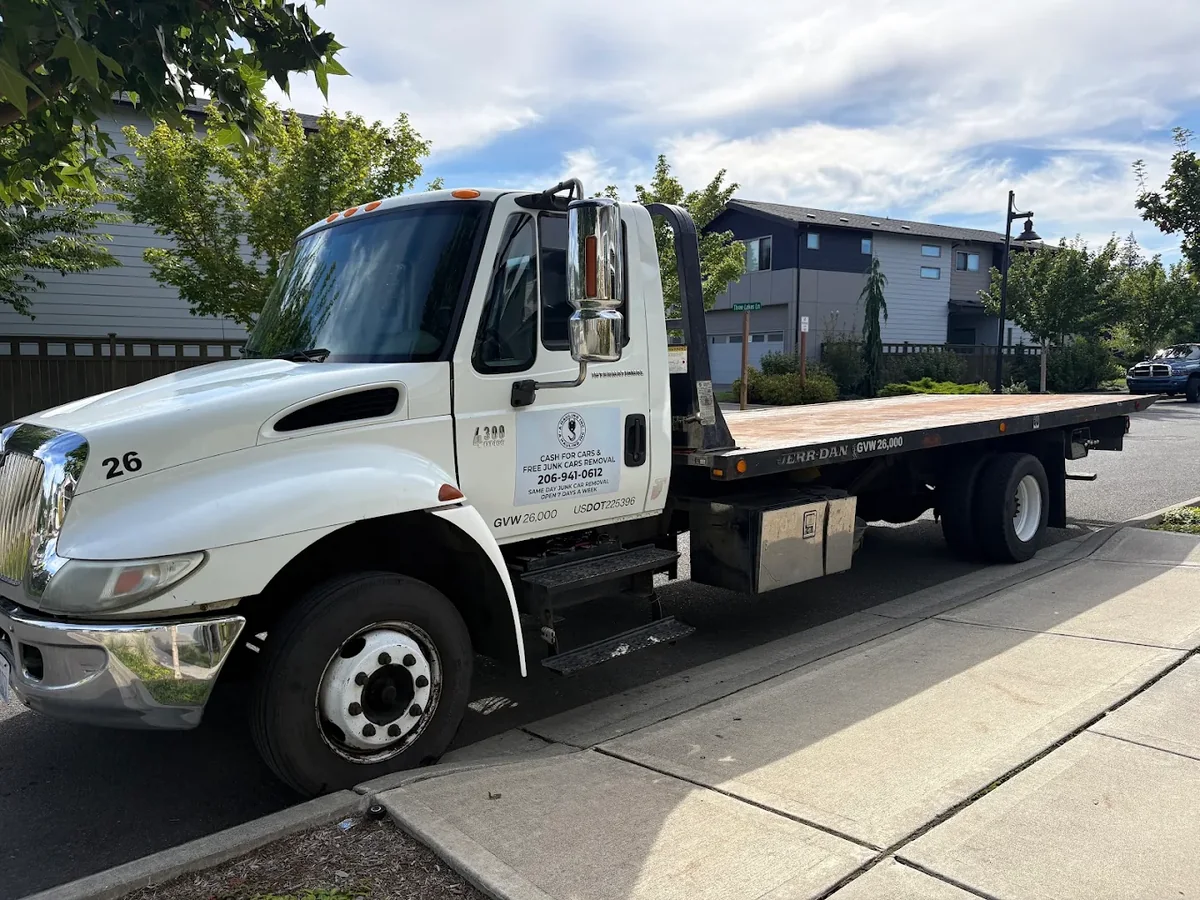
A car in this state does not run, so it needs a tow. A project buyer may take it if you share what the shop found. We also buy non-running cars and tow them free on a flatbed. Call (206) 941-0612, or see how it works. If the car stays at a shop while you decide, see selling from a repair shop.
Common questions
Keep reading
- Washington Junk Car Seller’s GuideEvery guide, sorted by where you are in the decision
- Washington Junk Car Paperwork GuideThe documents you need before pickup
- Car Keeps Overheating: When to Stop Fixing It
- Rusted Frame or Body: Is the Car Still Worth Saving?
- Electrical Gremlins: When to Give Up on an Old Car
- Car Burning Oil: Keep Topping Up, Fix It or Junk It?
- Airbags Deployed: Is the Car Worth Repairing?
- Failing Suspension or Steering on an Old Car: Repair or Junk?
How we can help
4.9 out of 5 from 160 Google reviews · Licensed & insured · 20+ years in business
They made it so easy and fast! I called them gave them all the details and they came within the hour towed the car and gave us cash on the spot will definitely recommend them :)
Very fast service. The tow truck driver was very skilled at getting my SUV out of a tight spot. I appreciate how easy it was to work with this company. Highly recommend 💞
Fast same day service. I just had to make sure we had the title and the truck was clean and we were good to go! Thanks for getting rid of our old truck for free.
If you have any questions please call us at 206-941-0612